
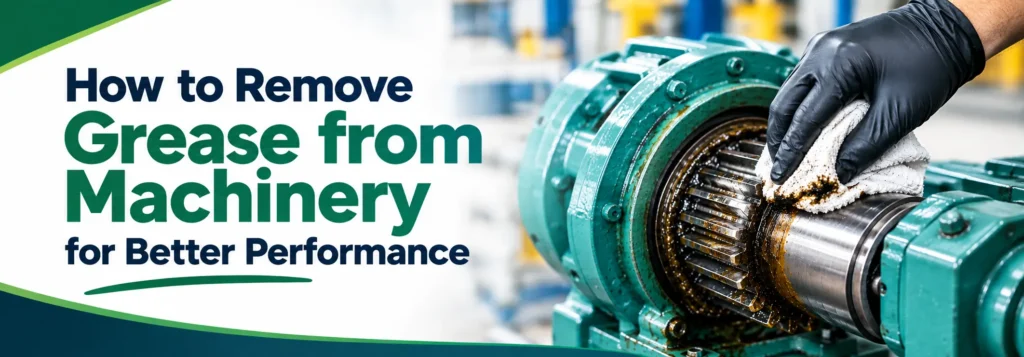
How to Remove Grease from Machinery Safely
Before learning how to remove grease from machinery, safety should always come first. Power down the machine and disconnect it from its energy supply until it has cooled down. These actions minimize the chances of unintended movements, thermal injuries, or electrical shock during cleaning operations.
Often wear proper personal protective equipment, which includes chemical-resistant gloves, goggles, and suitable attire while handling machinery degreaser solutions. Ensure proper air circulation within the working environment, especially if using high concentrations of degreasing chemicals or those containing solvents. Read the safety data sheets of the selected cleaning product before use.
It’s best to remove as much dirt and grease as possible before applying any grease remover products. Doing so ensures that the cleaning agent penetrates deeply into the crevices where grease has accumulated. Only apply industrial grease removers to appropriate surfaces, keeping away from electrical parts, seals, bearings, and other equipment components if the cleaner isn’t designed for those applications.
Never combine various cleaners in one application process. Rinse with care to avoid damaging electrical components or contaminating lubricants. Dispose of used cleaning supplies responsibly according to proper waste disposal regulations.
How to Prepare Machinery Before Cleaning
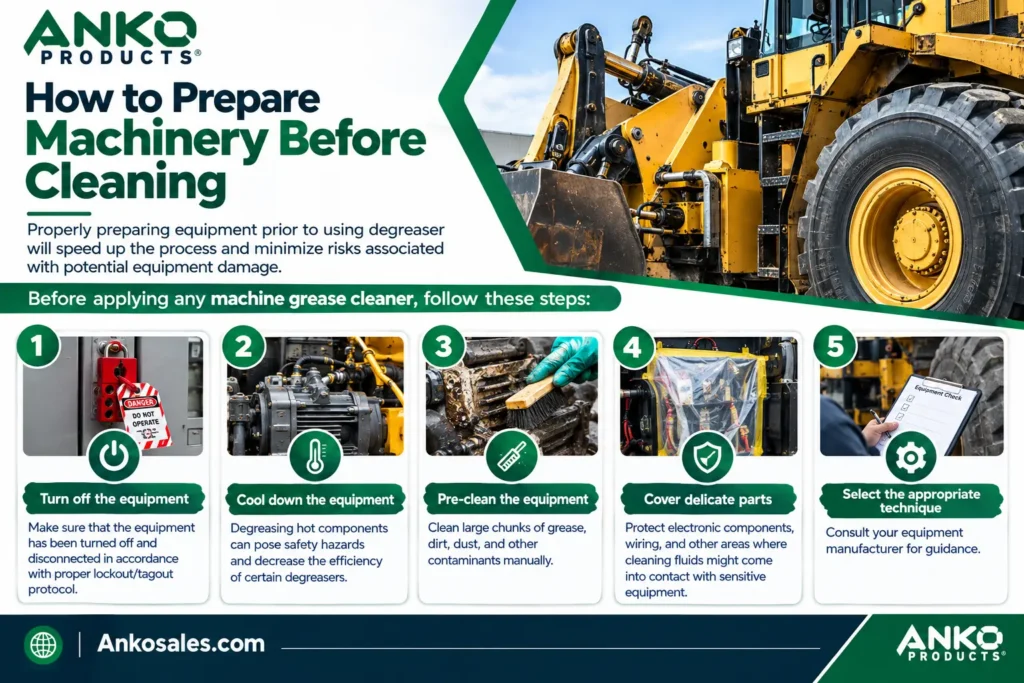
Properly preparing equipment prior to using degreaser will speed up the process and minimize risks associated with potential equipment damage. Before applying any machine grease cleaner, follow these steps:
Turn off the equipment: Make sure that the equipment has been turned off and disconnected in accordance with proper lockout/tagout protocol.
Cool down the equipment: Degreasing hot components can pose safety hazards and decrease the efficiency of certain degreasers.
Pre-clean the equipment: Clean large chunks of grease, dirt, dust, and other contaminants manually.
Cover delicate parts: Protect electronic components, wiring, and other areas where cleaning fluids might come into contact with sensitive equipment.
Select the appropriate technique: Consult your equipment manufacturer for guidance.
How to Apply an Industrial Degreaser
Once the equipment has been primed for treatment, use the industrial degreaser according to its packaging instructions. Following the recommended concentrations and usage directions will ensure maximum effectiveness while reducing chemical waste.
Apply evenly: Depending on the product recommendation, spray, brush, or pour the degreaser onto the greasy spots.
Provide dwell time: Allow the degreaser sufficient time to soak into the grease. Avoid letting the degreaser dry up unless specified by its packaging instructions.
Scrub hard-to-reach stains: Scrub tough spots with the appropriate brush or scrubbing tool.
Clean off grease: Rinse or wipe away the loosened grease and degreaser residue from the surface. Let it air dry fully before proceeding further.
How to Choose the Best Grease Remover for Machinery
Choosing the right grease remover for equipment is important because machinery can contain different metals, plastics, rubber seals, coatings, and painted surfaces. Products effective against one type of contamination might damage equipment surfaces when used improperly. Begin by determining which type of grease is present and which surfaces require treatment. Grease heavily baked onto surfaces will demand a tougher heavy-duty degreaser, whereas less concentrated contamination may suffice with a general-purpose formula.
Think about the kind of solution you want to buy. Water-based, solvent-based, alkaline, or low-odor degreasers have distinct applications based on their formulation. In many cases, machines require regular industrial machinery cleaning. As a result, water-based products are often adequate for this job. Some machines accumulate extreme amounts of grease and oil. For these situations, special formulations might work better. Remember to take safety into account if equipment operates near food items or pharmaceuticals.
Compatibility testing is necessary before investing in an equipment degreaser. Consider whether the degreaser will safely interact with metal components, paints, plastic parts, rubber seals, and protective coatings used in the machinery. Review the manufacturer’s guidelines regarding material compatibility before purchasing.
Contamination levels also impact which type of degreaser to choose. For machinery contaminated with construction rubble, automobile liquids, or industrial oil products, a degreaser for heavy equipment may provide the cleaning strength required. Standard industrial cleaning chemicals can handle regular maintenance needs.
Next, pay attention to worker safety, ventilation, environmental regulations, dilution ratios, and disposal procedures. The ideal industrial grease remover does not necessarily have to be the strongest one; rather, it should clean effectively without causing damage to the machinery, cleaning system, or working environment.
Heavy-Duty Truck Degreaser Comparison by Area
| Truck Area | Recommended Degreaser | Strength | Considerations |
|---|---|---|---|
| Engine Area | Solvent-based heavy-duty degreaser | Strong | Cuts baked-on oil and road grime; keep away from wiring and sensors |
| Underneath & Vehicle Frame | Alkaline heavy-duty degreaser | Strong | Handles caked mud, salt, and grease buildup; rinse thoroughly to prevent corrosion |
| Wheels, rims & brake dust | Non-acidic wheel degreaser | Moderate-strong | Safe on alloy and coated rims; avoid acidic formulas that pit metal |
| Fifth wheel & coupling | Heavy-duty grease solvent | Strong | Breaks down compacted grease; reapply lubricant after cleaning |
| Cab exterior & trailer | Water-based truck wash degreaser | Mild-moderate | Gentler on paint and decals; good for routine washes |
What to Look for When Buying a Machinery Degreaser
When choosing a machinery degreaser, don’t rely solely on cleaning effectiveness. Select a product that suits your grease type, surface material, application approach, and operational setting. Always consult the manufacturer’s documentation before purchasing any degreasing solution.
Buying Checklist:
Grease cutting ability: Ensure that you get a formula with sufficient grease-cutting capacity for the amount of build-up.
Compatibility: Ensure that the product will not harm metals, plastics, rubber, paints, and other coatings found on machinery surfaces.
Method of application: Ensure that it supports spraying, brushing, pressure washing, and/or immersion methods.
Concentration levels: Determine whether it needs dilution before use.
Personal protective equipment: Consider the smell, need for ventilation, personal protective equipment, and handling instructions.
Environmental impact: Evaluate wastewater treatment, disposal, and environmental concerns associated with usage.
Efficiency: Find a degreaser that makes it quicker to clean machines while requiring fewer passes.
FAQ
What is the best way to remove grease from machinery?
Use an appropriate degreaser meant for industrial use, after getting rid of any loose and excess grease. Let the degreaser do its job, and then wipe/rinse as instructed.
What is the best industrial degreaser for heavy machinery?
Select a heavy-duty degreaser engineered for machines, as well as being safe on the surfaces.
Can a heavy-duty degreaser remove old grease?
Yes. A strong degreaser will break down tough, set-in grease when given sufficient time.
How often should machinery be degreased?
This will depend on use and level of contamination. Stick to the manufacturer’s maintenance manual and degrease when there is heavy grease buildup.
What should I look for when buying a grease remover for equipment?
You should consider effectiveness against grease, compatibility with surfaces, usage methods, safety precautions, and environmental issues.
Conclusion
Having knowledge about how to remove grease from machinery can go a long way in ensuring your equipment works well, increasing visibility for inspections, and maintaining cleanliness within your maintenance facility. The process involves appropriate preparation, correct application methods, and using an industrial degreaser designed specifically for your machinery and contaminants.Having knowledge about how to remove grease from machinery can go a long way in ensuring your equipment works well, increasing visibility for inspections, and maintaining cleanliness within your maintenance facility. The process involves appropriate preparation, correct application methods, and using an industrial degreaser designed specifically for your machinery and contaminants. Anko Products Inc. offers effective cleaning and degreasing solutions to help meet a variety of machinery maintenance needs.Discovering the right product does not have to be difficult. You can explore everything you need for routine machinery cleaning or even for dealing with tough stains.